The paradox at the heart of saint lucia hotel sustainability energy
Step onto a clifftop terrace in Saint Lucia and the first impression is purity. The Pitons rise out of the sea, rainforest folds into volcanic slopes, and the island sells a vision of sustainable tourism that feels almost inevitable. Yet behind many suites and infinity pools, diesel generators still hum through the night and shape the real story of how hotels in Saint Lucia manage sustainability, energy use and environmental impact.
This is the central paradox of the island’s luxury tourism sector. High end resort brands market eco friendly escapes and low impact travel, while drawing electricity from a grid where recent government and LUCELEC data indicate that electricity from fossil fuels accounts for roughly 99 % of supply, a figure echoed in EBSCO Research and national energy reports. That tension defines how Saint Lucia tourism will either lead the Caribbean on renewable energy or remain locked into a high cost, high carbon model that quietly undermines resilience.
For business leisure travellers, this paradox is not abstract. Energy costs flow directly into nightly rates, and the sector’s dependence on imported fuel exposes every resort and hotel to price shocks that can reshape a stay. When you book a suite on this island, you are effectively buying into a particular energy generation model and a set of sustainability practices, whether the main content of the marketing highlights them or invites you to skip main environmental details.
Saint Lucia Hospitality and Tourism Association (SLHTA) executives know that this model is unsustainable. Their advocacy frames hotel sustainability, clean energy and resource efficiency as both a climate change responsibility and a hard headed business decision for the private sector. As one SLHTA representative noted in a recent briefing, “If we do not cut our energy costs, we cannot stay competitive in regional tourism.” The association has pushed the government to revise the Electricity Act so that hotels can invest directly in renewable power, rather than remaining passive consumers of a fossil heavy grid that limits sustainable tourism progress.
At the same time, the island’s positioning within the wider Caribbean is at stake. Saint Lucia competes with destinations where resort owners already deploy large scale solar energy and advanced waste management systems as standard. If Saint Lucia tourism wants to win future travel awards for sustainability, the sector must show that eco friendly claims are backed by measurable waste reduction, lower emissions and clear renewable energy targets that align with national climate goals.
The national context is shifting, even if slowly. The government has signalled that renewable energy should reach 35 % of the mix by the middle of the decade, a target again cited by EBSCO Research and reflected in Saint Lucia’s nationally determined contribution, yet hotels still face legal and technical barriers when they try to install their own solar arrays. This is where the island’s hotel sustainability and energy transition becomes a test case for how a small state can align tourism growth, international sustainability commitments and the lived experience of guests who expect both comfort and conscience.
How law and policy shape saint lucia hotel sustainability energy
To understand why more resorts are not already running on solar energy, you need to look at the rules. Saint Lucia’s Electricity Act has historically centralised power generation with St. Lucia Electricity Services Limited, known as LUCELEC, which manages the national grid and controls how private sector players can feed in renewable energy. That framework made sense when the island’s energy system was simpler, but it now constrains hotels that want to move faster on sustainability.
The SLHTA has been explicit in its lobbying. It is urging the government to amend legislation so that hotels can invest in their own renewable energy projects, connect them safely to the grid and benefit from predictable tariffs that make the business case work. Without those changes, efforts to improve Saint Lucia hotel sustainability and energy efficiency remain an aspiration rather than a structural shift, and the tourism sector cannot fully support the country’s nationally determined contribution under the Paris Agreement.
That nationally determined contribution sets out how Saint Lucia will cut emissions and build resilience, and tourism is central to both sides of the equation. Luxury properties sit on some of the island’s most exposed coastlines, so their resilience must meet rising sea levels and stronger storms while still offering seamless travel experiences. When a resort invests in renewable electricity and robust waste management, it is not only reducing its footprint but also protecting its own long term viability.
Recent policy moves suggest the government understands this alignment. The Tourism Development Bill aims to spread tourism benefits more equitably, while the Green Guide initiative signals a commitment to sustainable tourism standards that go beyond marketing language. For travellers, this means that hotel sustainability and clean energy in Saint Lucia is slowly being woven into how incentives, approvals and future tax breaks will be structured across the island.
Behind the scenes, LUCELEC and government agencies are working with international partners on smart grid integration, battery storage and more flexible rules for distributed generation. These tools matter because they allow resorts to install solar energy systems, capture rainwater harvesting for operations and manage demand without destabilising the island grid. A LUCELEC engineer recently summarised the goal as “making it easier for hotels to generate their own clean power while keeping the grid stable.” When the regulatory environment finally aligns with these technologies, the sector will be able to move from pilot projects to portfolio wide sustainable practices.
For executives extending a business trip into leisure, the policy story may feel distant, yet it shapes every booking decision. Properties that can cut their energy costs through renewable energy will have more room to invest in service, design and local partnerships that elevate your stay. If you want a deeper dive into how booking platforms are responding, the analysis on sustainable luxury hotel booking websites in Saint Lucia unpacks how digital channels are starting to prioritise verified eco friendly credentials.
Where saint lucia hotel sustainability energy is already changing your stay
Not every resort on the island is waiting for perfect legislation. A small but influential group of properties has treated Saint Lucia hotel sustainability and energy management as a design brief rather than a compliance issue, integrating renewable energy, waste reduction and local sourcing into the core guest experience. These are the places where you feel the difference in the quiet of the night and the clarity of the water below your balcony.
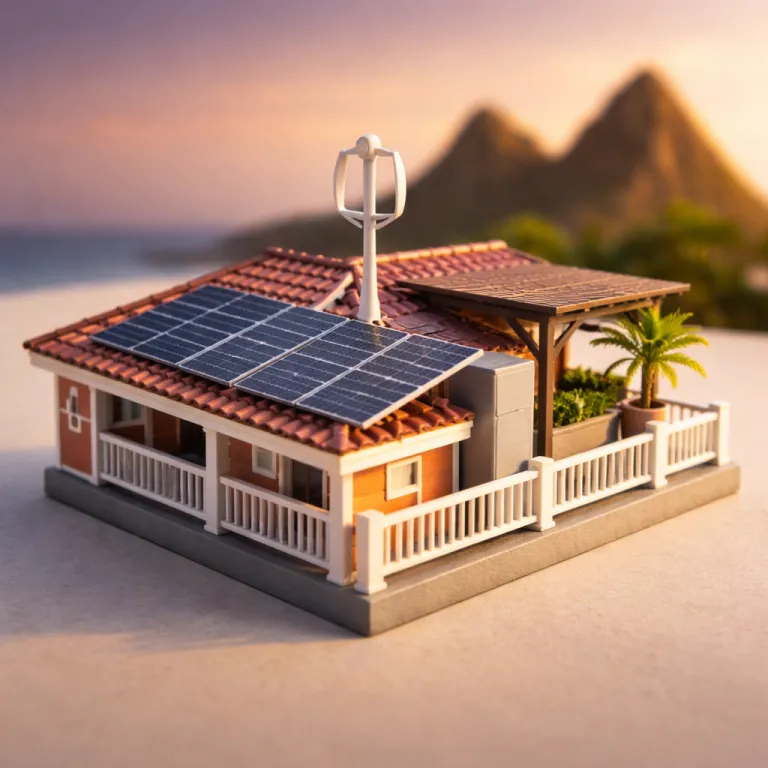
Some coastal resorts now use solar energy for a significant share of their daytime load, pairing panels with energy efficient systems and smart controls that trim consumption without compromising comfort. One leading property near Soufrière, for example, has installed around 400 kW of rooftop solar capacity that can cover close to 50 % of its peak daytime electricity demand on clear days, according to project documentation shared with SLHTA. With installation costs in the region of US $700,000 and annual savings estimated at over US $120,000, the simple payback period is under seven years, after which lower energy bills directly support staff, maintenance and guest services. Rainwater harvesting tanks sit discreetly behind suites, feeding irrigation and some grey water uses, while modern waste management contracts divert glass and organics away from landfill. For guests, the most visible signs may be subtle, from refillable glass bottles to menus that highlight local suppliers and reduced food waste.
On the south west coast near Soufrière, several high end properties have built their brand around sustainable tourism and deep engagement with local communities. They invest in training programmes for nearby villages, support Saint Lucia tourism craft initiatives and frame eco excursions as encounters with working landscapes rather than staged attractions. This is where hotel sustainability, energy choices and culture intersect, because a resort that buys local produce and services reduces transport emissions while keeping more value on the island.
In the north, larger all inclusive resorts are experimenting with different models. Some are piloting electric vehicles for on property transport, cutting both noise and emissions as guests move between suites, spa and beach. Others are working with LUCELEC on behind the meter solar installations that reduce peak demand and demonstrate how the tourism sector can help the grid manage future renewable energy targets without sacrificing reliability.
For a detailed look at how one major property is evolving, the review of Grande St. Lucian on discerning resort reviews in Saint Lucia offers insight into how large brands balance scale with sustainability. These case studies matter because they show that Saint Lucia hotel sustainability and energy innovation is not limited to small eco friendly hideaways, but can be integrated into sizeable operations that host international conferences and incentive groups. When such properties align their practices with international sustainability benchmarks, they raise expectations across the island.
For travellers specifically seeking luxury eco resorts in Saint Lucia, the curated guide to sustainable elegance in the Caribbean highlights properties where renewable energy, low impact architecture and thoughtful waste reduction are already embedded. These resorts show that responsible energy use in Saint Lucia’s hotels can coexist with high thread count linens, serious wine lists and attentive service. The lesson is clear ; when sustainability is treated as a design principle, not a constraint, the guest experience becomes richer rather than compromised.
How travellers can separate real saint lucia hotel sustainability energy from greenwashing
For all the progress, the language of sustainability in Saint Lucia tourism is still uneven. Many properties use eco friendly as a loose adjective, yet offer little detail on energy sources, waste management or local employment, and that vagueness is your first red flag. Serious players in hotel sustainability and energy performance publish specific data, set clear targets and link their efforts to national and international sustainability frameworks.
When you evaluate a resort, start with its energy story. Does the property explain how much of its electricity comes from renewable energy, whether through on site solar energy or green tariffs negotiated with LUCELEC, or does it simply mention “green initiatives” without numbers. Hotels that are genuinely aligned with Saint Lucia’s nationally determined contribution will often reference national climate change goals, resilience meet programmes and the role of the tourism sector in achieving them.
Next, look at how the property handles water and waste. Credible leaders in Saint Lucia hotel sustainability and energy conscious design describe rainwater harvesting systems, low flow fixtures and clear waste reduction strategies that go beyond towel reuse cards. They should outline how they separate recyclables, manage organic waste and work with local partners to minimise landfill, because waste management on a small island is both a logistical and environmental challenge.
Transport is another revealing lens. Ask whether the resort uses electric vehicles for internal logistics or airport transfers, and whether it encourages guests to choose lower impact options for excursions and business travel. Properties that integrate these choices into their operations show that sustainability practices are not confined to back of house engineering, but shape the full travel experience from arrival to departure.
Independent recognition can help, but it is not infallible. Travel awards that focus on sustainable tourism can highlight leaders, yet you should still read the criteria and see whether energy, climate change adaptation and community impact are central or peripheral. The most reliable signals remain transparent reporting, third party audits and alignment with the Green Guide and other government backed frameworks that embed Saint Lucia hotel sustainability and energy standards into formal criteria.
As you compare options on booking platforms, pay attention to how much space is given to environmental performance versus generic lifestyle imagery. A property that treats sustainability as main content rather than a footnote you could almost skip main is more likely to have embedded it into daily operations. In the words of one official response to traveller questions, “Hotels are adopting solar panels and energy-efficient systems.” and “What are the benefits of hotels using renewable energy? Reduced energy costs and lower carbon emissions.” and “How is the government supporting renewable energy in hotels? By developing supportive legislation and policies.” ; taken together, these statements capture how guest choices, hotel investments and public policy now intersect on this compact Caribbean island.
Key figures on saint lucia hotel sustainability energy
- Electricity from fossil fuels accounts for about 99 % of Saint Lucia’s power generation according to EBSCO Research, LUCELEC statistics and national energy reports, which means most hotels still rely on diesel based energy unless they install their own renewable systems.
- The national renewable energy target is 35 % of electricity generation by the middle of the decade, again reported by EBSCO Research and referenced in Saint Lucia’s climate policy documents, a shift that would significantly lower operating costs and emissions for the tourism sector if fully achieved.
- Saint Lucia’s nationally determined contribution under the Paris Agreement positions tourism as a key sector for emissions reduction, so hotel investments in solar energy, rainwater harvesting and waste reduction directly support international sustainability commitments.
- High energy costs linked to imported fossil fuels can represent a substantial share of hotel operating expenses on the island, which in turn influences room rates and the financial case for large scale renewable energy adoption.